

How to Protect Yourself from Digital Arrest Scams
Digital Arrest is one of the most alarming cyber security threats in India, where fraudsters pose themselves as CBI, police, or other officials via calls/video calls to falsely accuse victims of serious crimes.
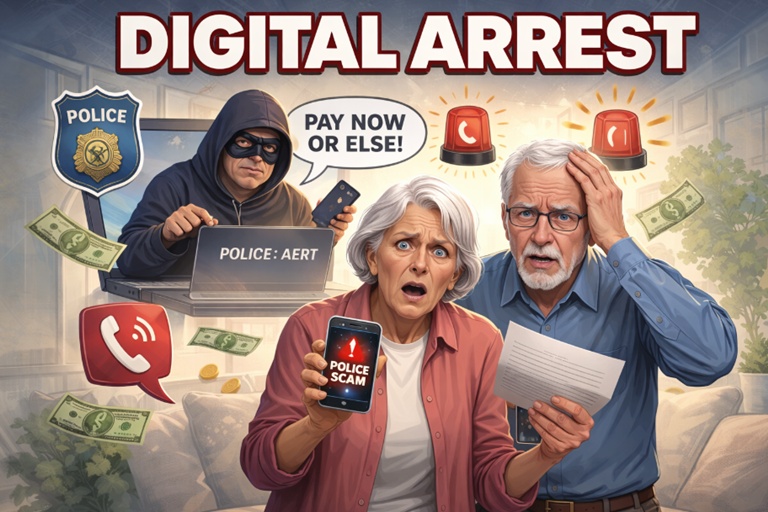
Criminals extort money in exchange for agreeing not to expose the false legal cases that have been constructed or to settle the issue. (Image: AI Generated)
Understanding the Digital Arrest Scam
In observance of Cyber Jaagrookta Diwas, Bank of India is raising awareness about the “Digital Arrest” scam. This is one of the most alarming cyber security threats in India today. Fraudsters impersonate officials from the CBI, police, or other government agencies via voice and video calls to falsely accuse victims, particularly senior citizens, of serious crimes.
The goal is to create intense fear and isolation. Scammers use fake documents, staged videos, and deepfakes to appear legitimate, eventually demanding money as a “bail” or “fine” via UPI or RTGS to avoid arrest.
How the Scam Works (Modus Operandi)
- Impersonation and Spoofing: Scammers use IVR calling and spoofed numbers to pose as representatives from the Mumbai Police, Delhi Police, CBI, Narcotics Department, RBI, Telecom Department, or Enforcement Directorate.
- Intimidation: They allege the victim is involved in illegal activities. Common claims include the shipment of contraband (drugs or fake passports) via FedEx or DHL, the misuse of Aadhaar cards, or involvement in money laundering and terrorism. Some may claim a loved one has been arrested or involved in an accident.
- Digital Confinement: Victims are forced into a “digital arrest,” where they must remain on a continuous video call via Skype or WhatsApp. Scammers often use a fake police station backdrop to convince the victim they are speaking with actual law enforcement.
- Financial Extortion: Once the victim is isolated and frightened, the criminals demand money to settle the case or prevent the “legal” charges from being exposed.
How to Protect Yourself
The most important thing to remember is that there is no concept of “Digital Arrest” under any Indian law. Real law enforcement agencies will never arrest you via a video call or demand money over the phone to drop charges.
Follow these steps to stay safe from mobile banking fraud and cyber extortion:
- Verify the Source: Never share personal or financial information over the phone, email, or messaging apps. If you receive a suspicious call, hang up and contact your nearest police station directly to verify the claim.
- Break the Isolation: Scammers want you to keep the call secret. Speak to friends or relatives immediately before transferring any money.
- Stay Informed: Keep up to date with the latest cybercrime prevention tips. You can follow @cyberdost on social media for official alerts and safety guidelines.