

India’s housing agenda needs policy reset to unlock $5.8 trillion realty opportunity
The KPMG-NAREDCO report urges policy reforms in affordable housing, rental housing, RERA implementation and insolvency resolution to help India’s real estate sector achieve a projected valuation of $5.8 trillion by 2047 amid rapid urbanisation.

As RERA nears a decade of implementation, the report recommends greater regulatory consistency, wider use of digital project-monitoring systems, faster enforcement of orders and increased awareness in Tier-II and Tier-III cities.
Focus on affordable and rental housing, protecting homebuyer interests under RERA-IBC and implementing provisions of RERA strongly are some measures India needs to take to unlock USD 5.8 trillion opportunity in real estate by FY27, says a joint report by KPMG in India and the National Real Estate Development Council (NAREDCO).
The report, “Advancing India’s housing and Urban Development Agenda”, was unveiled by Union housing and Urban Affairs Minister Manohar Lal Khattar at the NAREDCO Real Estate Conclave 2026.
Framing housing as a key pillar of the Viksit Bharat 2047 vision, the report highlights four policy priorities: affordable housing, rental housing, homebuyer protection under the RERA-Insolvency and Bankruptcy Code (IBC) framework, and stronger implementation of the Real Estate Regulatory Authority (RERA).
With urbanisation in India likely to cross 40 per cent by 2036 and almost 50 per cent by 2050, it increases the need for affordable housing and infrastructure. Despite rapid urbanisation being one of the biggest drivers of growth in real estate, some challenges such as scarcity of land, restrictive FAR/FSI norms, lengthy approval process, expensive funding for affordable housing projects, dismal rental yield, overlap of RERA and IBC continue to plague the sector.
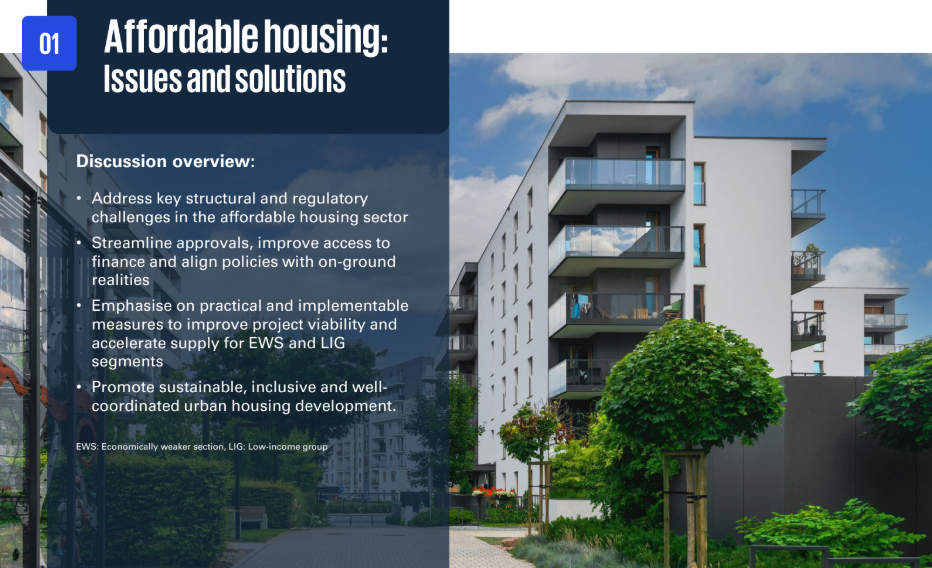
Higher supply of affordable housing especially for EWS/LIG segment can be achieved by bringing in more land under development, permitting higher FAR, simplified approvals with single window clearances, availability of low cost finance and tax incentives, among others.
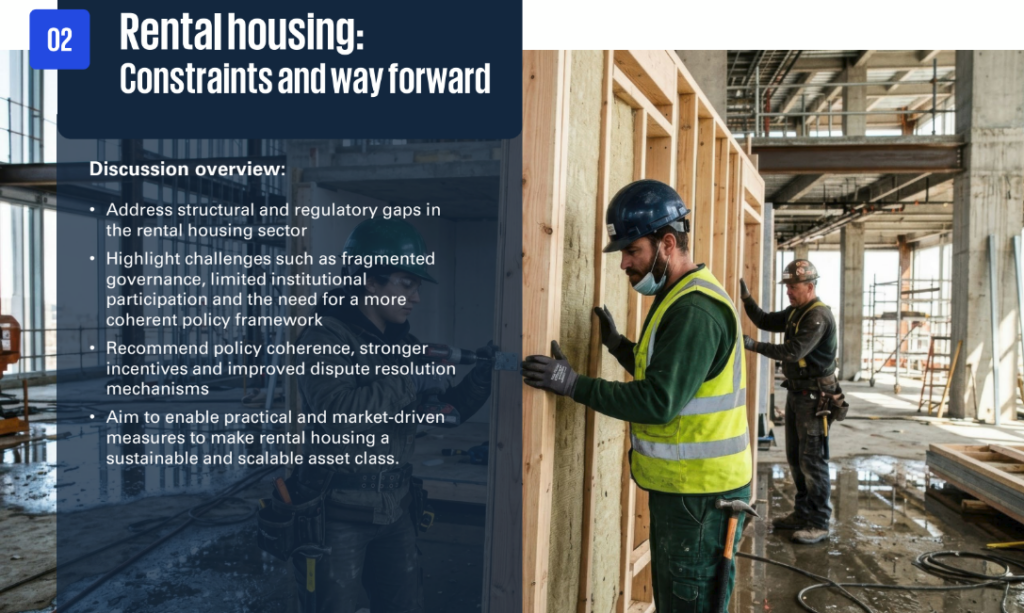
To address rising demand for rental housing, it calls for a formal ecosystem supported by institutional investment, regulatory backing and innovative financing. Recommendations include expanding Affordable Rental Housing (ARH) models, converting vacant assets into rental stock, rationalising GST and creating dedicated frameworks for students, migrant workers, working women and senior citizens.
The report also urges closer RERA-IBC alignment to protect homebuyers in stressed projects through project-wise insolvency resolution, early-warning systems, stronger coordination between RERA authorities and insolvency professionals, and enhanced safeguards during insolvency proceedings.
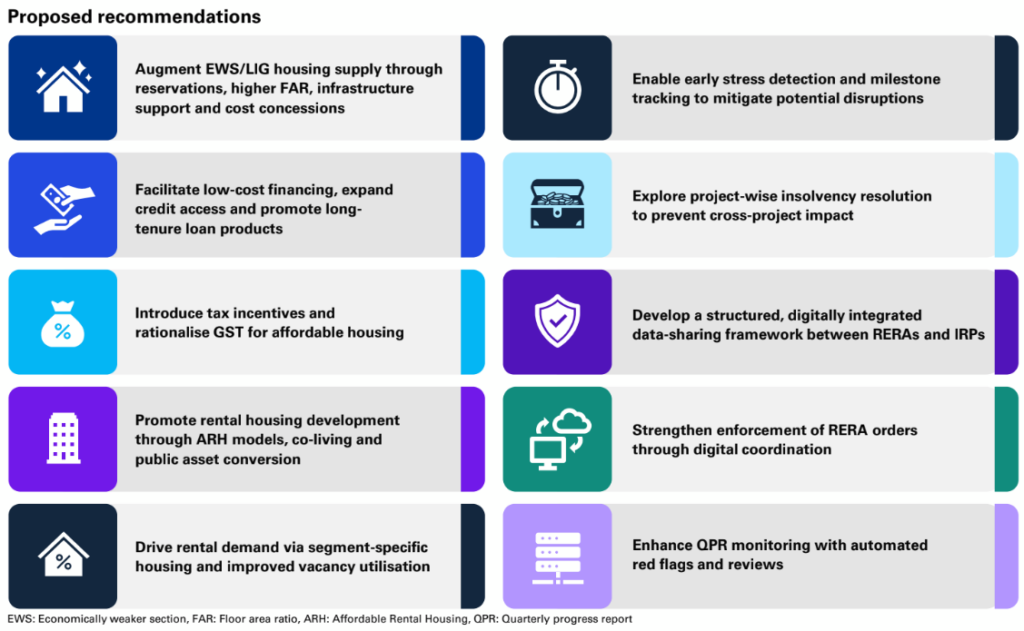
Since RERA’s introduction, 1.65 lakh projects and 1.16 lakh agents have been registered, while 1.62 lakh complaints have been resolved across states and union territories, the report noted.
Parveen Jain, National President, NAREDCO, said the real estate sector would be central to India’s development and called for stronger collaboration among government, industry and financial institutions to accelerate housing and infrastructure delivery.
Neeraj Bansal, Partner and Head – India Global, KPMG in India, said, “A common theme across the sessions is unlocking the supply side of housing through structural reforms. This need is felt especially in economically weaker sections and lower-income groups. Faster approvals, easier availability of land and greater access to affordable credit can go a long way in speeding up delivery of affordable homes. Additionally, rental housing stock should be nurtured as a viable, institutional asset class supported by well-designed regulations and attractive incentives.”
Building trust within the ecosystem is equally important. Tightening the congruence of RERA and IBC framework, and driving uniformity and tech-enabled enforcement of regulations can go a long way in bringing about transparency, accountability and execution of projects. Simultaneously, evolving new-age funding approaches, PPP models and factoring in sustainability while planning can aid in creating future-proof cities.
As RERA nears a decade of implementation, the report recommends greater regulatory consistency, wider use of digital project-monitoring systems, faster enforcement of orders and increased awareness in Tier-II and Tier-III cities.
It concludes that balancing regulatory oversight with market efficiency will be essential for building an affordable, transparent and sustainable housing ecosystem that supports India’s long-term urbanisation and economic growth.





6 thoughts on “India’s housing agenda needs policy reset to unlock $5.8 trillion realty opportunity”