
Gold remains a long-term favourite, while silver outlook stays positive: Emkay Wealth Management
Gold remains supported by central bank buying and its safe-haven appeal, while silver offers stronger return potential but comes with higher volatility.
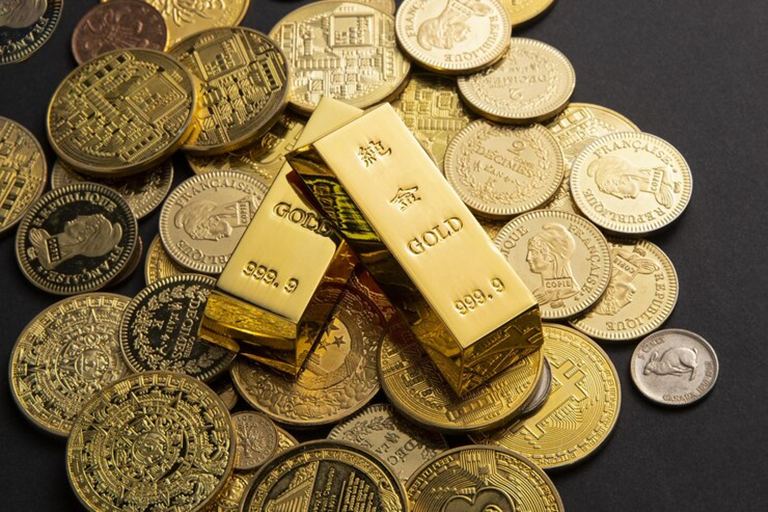
Emkay expects gold to have another 12% upside potential, while silver could face resistance around US$68 and US$74 an ounce. (Image: Freepik)
Gold and silver may have seen some profit-taking in recent weeks, but their longer-term investment case remains intact, according to Emkay Wealth Management. strong central bank buying, expectations of global interest-rate changes and continued demand for diversification are keeping the precious-metals story alive.
As of July 31, 2026, gold was trading at around US$4,328 an ounce, while silver was at about US$62 an ounce. Gold has found support around US$4,060, while silver has held above the US$58 level over the past four to six weeks.
The recent correction, therefore, does not necessarily signal a change in the broader trend. Instead, the consolidation could provide a base for the next phase of the rally.
“Recent correction in precious metals needs to be viewed in the context of the larger structural rally. Gold and silver have continued to demonstrate resilience despite profit booking and uncertainty around the interest-rate trajectory,” said Vivek Choksey, Regional Manager, Emkay Wealth Management, Ahmedabad.
According to Choksey, gold continues to benefit from its position as a strategic reserve asset, with central banks remaining important buyers. A prolonged move towards lower interest rates could provide another boost to precious metals.
Gold: Structural support remains strong
Gold’s recent rise has been supported by more than just investor momentum. Central bank purchases and the growing preference for diversifying reserves have provided a strong underlying foundation for the metal.
Emkay Wealth Management believes the current gold cycle may still have some way to go, given that the rally has so far covered only part of its average historical cycle. That does not rule out periodic corrections, but the longer-term trend remains favourable.
The strong performance of gold-linked investment products also reflects the sharp rise in prices. As of July 31, 2026, HDFC Gold ETF, Kotak Gold ETF and Nippon India ETF Gold BeES had delivered one-year returns of 43.47%, 43.53% and 43.24%, respectively. Their three-year returns stood at 32.37%, 32.49% and 32.27%.
Gold funds have also delivered strong returns, with leading schemes generating around 42% over one year and more than 31% over three years.
Silver offers higher returns, but with greater swings
silver has outperformed gold over the past year, although investors have had to contend with sharper price movements. Unlike gold, silver has a larger industrial demand component, making it more sensitive to economic conditions and changes in investor sentiment.
As of July 31, 2026, ICICI Pru silver ETF had delivered a one-year return of 95.24%, while Nippon India silver ETF returned 94.55%. Over three years, the two schemes delivered 42.09% and 41.71%, respectively.
Silver funds have also recorded one-year returns of more than 90% among the schemes tracked.
Going ahead, a sustained easing in global interest rates could be positive for both metals. Lower rates reduce the opportunity cost of holding assets such as gold that do not generate interest income, potentially making them more attractive to investors.
Emkay expects gold to have another 12% upside potential, while silver could face resistance around US$68 and US$74 an ounce.
For investors, however, the recent correction is a reminder that precious metals can move sharply in both directions. Gold may continue to have a role as a portfolio diversifier, while silver could offer greater upside along with greater risk. The right allocation will ultimately depend on an investor’s risk appetite, investment horizon and overall asset-allocation strategy.





3 thoughts on “Gold remains a long-term favourite, while silver outlook stays positive: Emkay Wealth Management”