

Dubai real estate shows resilience as investor confidence returns: ANAROCK
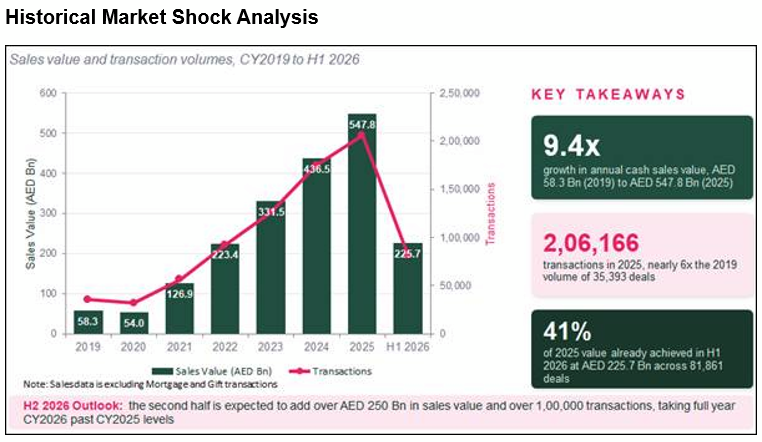
Despite a brief dip in buyer sentiment during regional geopolitical tensions, Dubai’s residential market recorded AED 225.7 billion in transactions in H1 2026, supported by strong investor confidence.
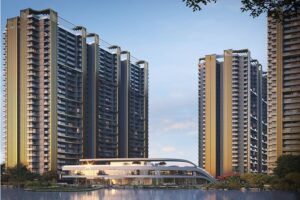
Over 1,29,600 new investors entered Dubai market in 2025, up 23% y-o-y. (AI Image)
Dubai’s residential property market proves sturdy yet again! Dubai saw home sales worth AED 225.7 billion during January-June 2026; even as geopolitical tensions in the Middle East rattled sentiment early this year. Buyers snapped back to the market swiftly, while prices hardly budged, as per the latest ANAROCK research.
Commenting on the same, Aayush Puri, CEO – residential, Middle East & CEO – ANAROCK Channel Partners (India), says, “The report highlights that while geopolitical tensions briefly affected buyer sentiment during March and April 2026, the correction was largely sentiment-driven – not structural. residential prices softened by just 4-7% in the February to April period, significantly outperforming the DFM Real Estate stock index, which crashed 34% at its peak – the widest sentiment-to-asset gap of any Dubai crisis on record.”
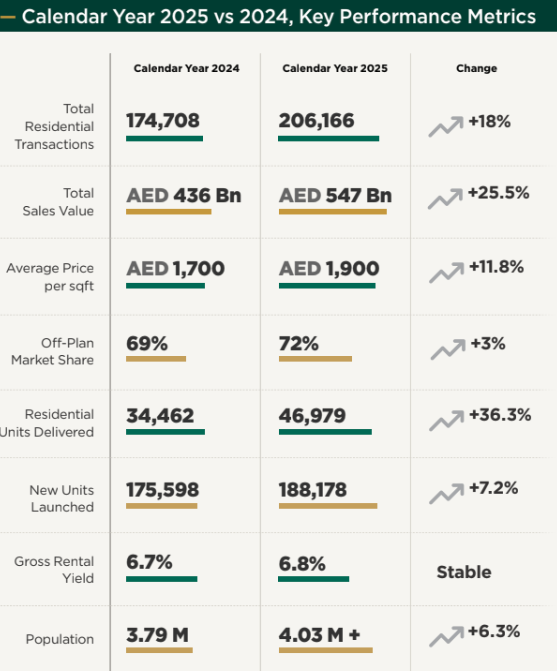
ANAROCK data indicates overall residential prices in Dubai in H1 2026 stand at approx. AED 1,900/sq.ft. – in same period of 2025, it was AED 1,800/sq.ft., amounting to a 6% yearly gain.
“The recovery has been underpinned by robust market fundamentals,” adds Aayush Puri. “Dubai recorded AED 225.7 billion worth of residential transactions in the first half of 2026, representing 15% growth against 2024 but dropping 16% against 2025. Moreover, off-plan transactions consistently accounted for nearly 70–77% of market activity throughout the period, highlighting sustained buyer confidence despite short-term uncertainty.”
“The conflict early in 2026 tested Dubai’s residential market at a time when regional uncertainty was at its peak. In the months that followed, buyer activity returned steadily, prices remained resilient, and demand continued to be supported by strong structural fundamentals rather than speculative momentum,” adds Puri.
Buyer Enquiries Recover
Enquiries from buyers took time to recover after initial slowdown caused by the geopolitical event. However, demand picked up as ceasefire talks began. Weekly residential sales volumes peaked at AED 10 billion during this period demonstrating investor sentiment that the slowdown in activity was short-lived with limited impact on longer-term market fundamentals.
Dubai Still Boasts Positive Long-term Fundamentals
Outside of this initial bounce-back period, Dubai’s structural drivers remain intact. The city added around 470 residents daily during 2025, the emirate’s population surpassed 4.03 million, while total residential sales surged to record AED 547 billion worth of transactions over 206,166 deals in 2025 – underscoring sustained demand from international investors. Additionally, expansion of Golden Visa eligibility to include properties on mortgage is likely to expand the eligible buyer pool even further.
Dubai Residential Market Update: Buyer Dynamics
“We’re now beginning to see a transition to a more picky market phase where returns will be dictated by micro-market fundamentals vs. system-wide price increases,” says ANAROCK.
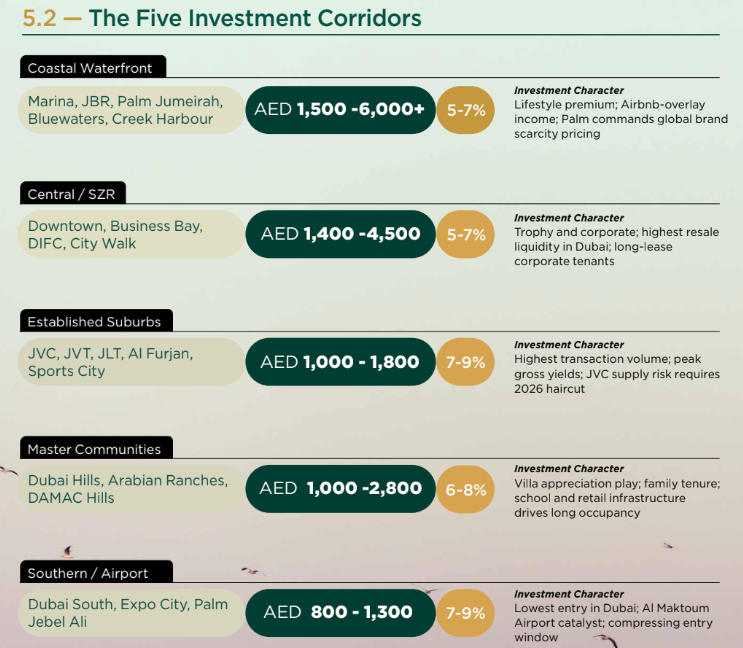
Premium locations such as Palm Jumeirah and Downtown Dubai are expected to continue benefiting from strong global wealth inflows, while emerging infrastructure-led corridors such as Dubai South are positioned for sustained long-term growth. Conversely, supply-heavy mid-market locations are likely to witness more measured appreciation.
The report highlights the buyer trends emerging from the 2025 data:
* Buyers that actively bought residential property in Dubai in 2025 hailed from >150 countries – with India at the top (22%), followed by UK 17%, China 14%
* Over 1,29,600 new investors entered Dubai market in 2025, up 23% y-o-y; around 80% of transactions are cash funded, insulating the market from interest rate shocks
* 38% buyers bought homes in Dubai for end-use, 28% buy-to-let income, 21% Golden Visa residency, while 13% capital preservation.
The report further analyses the impact of various global and domestic events on Dubai’s residential market and the subsequent recovery phases. Armed conflict and economic/financial shocks are distinct categories of disruption, and are presented in terms of their observed market impact:
* Global Financial Crisis (2008 to 2010): Residential prices fell ~40% and took 3.5 years to recover – the slowest rebound in Dubai’s history
* Oil price collapse (2015 to 2016): Only a 2% correction, since oil is under 1% of Dubai’s GDP
* COVID-19 (2020): A 6% correction which recovered in 13 months, the fastest full-cycle turnaround at the time
* Russia-Ukraine conflict (2022): No decline at all, Dubai was a net beneficiary as Russian capital re-rated Palm Jumeirah pricing
* Iran conflict (2026): 4-7% correction, the smallest price impact observed among the events analysed, with recovery already underway within four months
Going forward, ANAROCK’s base-case outlook projects 4-7% residential price growth during 2026, supported by continued population growth, expanding international buyer participation and favourable government policies.
While geopolitical developments remain a key risk to monitor, the report concludes that Dubai’s residential market has once again demonstrated its ability to absorb external shocks while maintaining long-term investment momentum.




3 thoughts on “Dubai real estate shows resilience as investor confidence returns: ANAROCK”