

Budget 2026–27 balances growth, inclusivity and fiscal prudence
This year’s Budget while maintaining continuity has attempted a careful structural transformation.
The Budget for 2026-27 is a significant step toward making India a global hub for innovation and advanced manufacturing with global competitiveness as the lynchpin.
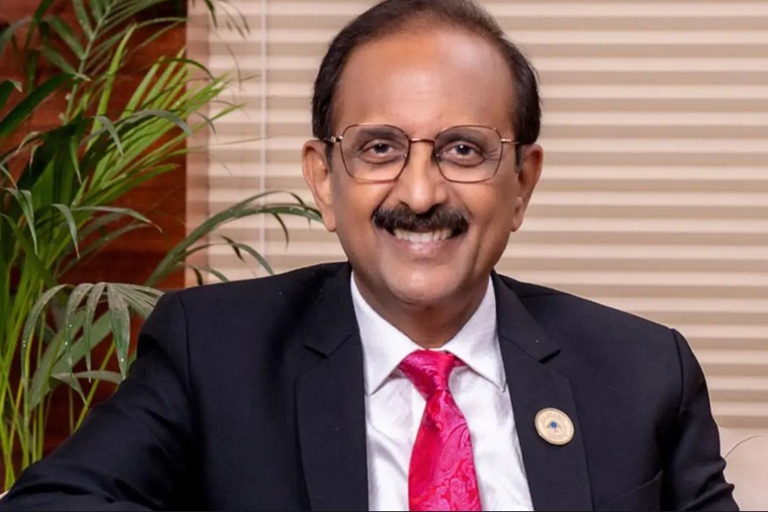
By Challa Sreenivasulu Setty
The Union Budget 2026-27 maintains policy continuity, tax predictability while attempting a fine balance between rural & urban, legacy & sunrise sectors. The first Budget from Kartavya Bhawan rests on three pillars namely 1) economic development – accelerate economic growth and build resilience, 2) people centricity – fulfil aspirations and build their capacity and 3) inclusivity – Sabka Sath, Sabka Vikas.
This year’s Budget has both predictable and futuristic elements. The predictable part is the basic structure which remains focused on emerging and employment generating sectors. Infrastructure sector continues to be an anchor, with increase in proposed investments. The thrust on sunrise sectors which form the futurist part has announcements on Semiconductors, Data Centres, Carbon Capture Utilization and Storage, Critical Minerals etc.
Starting with basic fiscal math, the budgetary allocations are based on the assumption of nominal GDP growth of 10% which appears prudent given the way inflation is panning out. This translates into a fiscal deficit estimated at 4.3 percent of GDP. The debt-to-GDP ratio is estimated to be 55.6 percent of GDP in 2026-27, compared to 56.1 percent of GDP in 2025-26. The gross market borrowings are estimated at Rs 17.2 lakh crore, while the public capex is budgeted at Rs 12.2 lakh crore.
The taxation part remained predictable and conservative with changes largely supporting the proposed announcements. Some of the notable points include – New Income tax Act ,2025 to come into effect from April 2026, raising the STT on derivative, Customs Integrated System (CIS) to be rolled out in 2 years, MAT is proposed to be made final tax, continuation of tax holiday for Financial Institutions in GIFT City etc.
On the rural and agriculture side the Budget has made some notable shifts. The focus will now be on high value products such as sandalwood, cashews, fisheries though Integrated development of 500 reservoirs, coconut promotion scheme to increase production, rejuvenating old, low-yielding orchards and expand high-density cultivation of walnuts, almonds and pine nuts. There is also focus on expanding the use of AI in agriculture by integrating Agri Stack portals.
Emphasis on services, particularly tourism, orange economy and education are timely and complimentary to both proposed infrastructure expansion, connectivity and digital capex led future growth. High-Powered ‘Education to Employment and Enterprise’ Standing Committee will focus on the services sector as a core driver of Viksit Bharat. The Budget proposes establishing Five Hubs for Medical Value Tourism, Pilot scheme for upskilling 10,000 guides, National Destination Digital Knowledge Grid to digitally document all places of significance and develop 15 archaeological sites into cultural destinations among many.
Infrastructure remains in focus as was the case in previous Budgets resting on two pillars, scale and connectivity. On scaling side, Budget proposes to establish new Dedicated Freight Corridors and operationalise 20 new National Waterways (NW) over next 5 years. The massive scale of specialized construction requires domestic supply chain of infrastructure equipment. Keeping this in mind, the Budget has proposed domestic manufacturing of high value and technologically advanced Construction and Infrastructure Equipment. On the financing side, to further strengthen the confidence of private developers an Infrastructure Risk Guarantee Fund will be set up to provide prudently calibrated partial credit guarantees to lenders.
Chemical sector has been identified for possible import substitution by many commentators. Keeping in line with this, a Scheme to support States in establishing 3 dedicated Chemical Parks, through challenge route, on a cluster-based plug-and-play model will be explored. Accepting the reality of rapidly urbanising India, the Budget has tried to harness the power of urban agglomerations. Towards this end, city economic regions (CER) will be mapped based on their specific growth drivers and an allocation of Rs 5000 crore per CER over 5 years for implementing development plans.
In the sunrise sectors, the Budget has proposed scaling up of current Indian Semiconductor Mission by proposing India Semiconductor Mission (ISM) 2.0 to produce equipment and materials, design full-stack Indian IP, and fortify supply chains. Keeping in mind the disruption in critical minerals, the existing National Critical Mineral Mission will be complimented by a dedicated Rare Earth Corridors to be established and exemption from BCD for capital goods import. The Budget has a scheme with an outlay of Rs 20,000 crore over the next 5 years for Carbon Capture Utilisation and Storage. Customs duty exemption has also been extended for inputs in solar panels, nuclear parts, and Lithium-Ion Cells.
Turning to finance, a major announcement is the setting up of a “High Level Committee on Banking for Viksit Bharat” to review the sector and align it with India’s next phase of growth, while safeguarding financial stability, inclusion and consumer protection. Furthermore, the government proposes to restructure the Power Finance Corporation and Rural Electrification Corporation to achieve scale and improve efficiency. To further deepen the municipal bonds Market, an incentive of Rs 100 crore for single issuance of municipal bonds of more than Rs 1000 crore has been announced. For the SME sector, equity support through dedicated Rs 10,000 crore SME Growth Fund supported by mandate in TReDS along with a credit guarantee support mechanism and top up funds of 2000 Cr for SRI (Self Reliant India) Fund are welcome moves.
In conclusion, this year’s Budget while maintaining continuity has attempted a careful structural transformation. The people centric initiatives, ease of doing business and living measures which form the softer aspects of the tough decisions identifies the challenges that country faces. There are many positives and opportunities for banking sector. Reinventing banking in rapidly changing context and keeping financial markets orderly and stable thereby aligning with India’s next phase of growth continues to be imperative for the sector. The Budget for 2026-27, is thus a significant step toward making India a global hub for innovation and advanced manufacturing with global competitiveness as the lynchpin.
(The author is Chairman, State Bank of India, Mumbai. Views are personal)