
Hotel investments in India jump 197% to $497 mn in H1 2026: JLL
Real estate developers accounted for 58% of hotel investment volumes in H1 2026, while Tier II and III cities attracted 60% of transactions, says JLL.
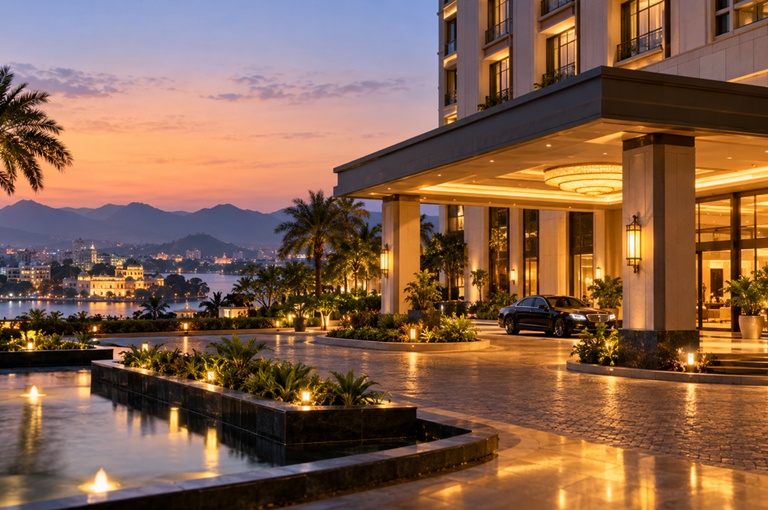
Luxury hotels attracted 51% of investment volumes, followed by upscale properties at 35% and upper-upscale hotels at 12%. Economy hotels accounted for 2%. (AI Image)
India’s hotel market is attracting a different set of investors, with real estate developers taking the lead and smaller cities drawing a larger share of deals.
Hotel transactions worth $497 million were recorded in January-June 2026, nearly three times the $167 million seen in the same period last year. The deals, spread across 11 transactions, put the sector on course for a strong year. JLL expects investment volumes to touch $1.1 billion in 2026, up from $567 million in 2025.
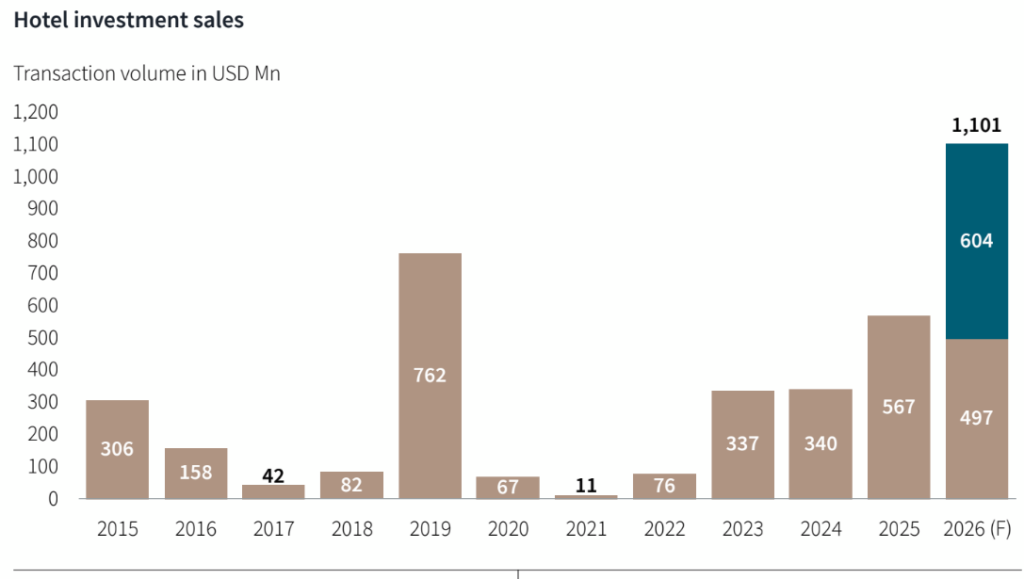
The figures are part of JLL’s Hotel Investment Trends in India for H1 CY 2026 report.
Developers account for bulk of deals
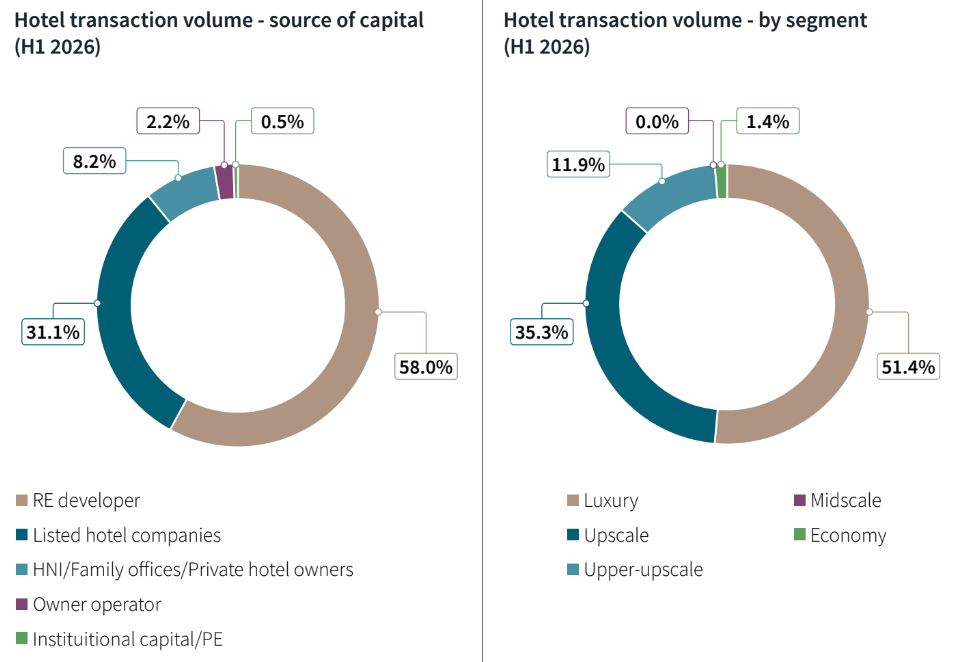
Real estate developers accounted for 58% of hotel investment volumes in the first half of 2026. This is a marked change from last year, when HNIs, family offices and private hotel owners together accounted for about 54% of investments.
Listed hotel companies had a 31.1% share, while HNIs, family offices and private hotel owners accounted for 8.2%.
Gaurav Sharma, Managing Director, Hotels, India, and Senior Director, Hotels Capital Markets, Asia, at JLL, said the change in investor mix was one of the key developments in the market. Developers are increasingly looking at hotels as part of their real estate portfolios, while investors are also exploring opportunities beyond the larger cities.
Smaller cities get a bigger share
Tier II and III cities accounted for 60% of hotel investment volumes in H1 2026, leaving Tier I cities with a 40% share.
The deals covered a range of properties, from luxury resorts in Kerala and Coorg to hotels in Agra, Mussoorie, Noida, Udaipur and Jaipur.
Activity continued into the second half, with hotel acquisitions in Ahmedabad, Bengaluru and Pune. Land deals included 420 acres in the Mumbai Metropolitan Region and 15 acres in Goa, with a combined value of around $313 million.
For investors, the appeal of smaller cities lies in the opportunity to tap leisure travel and emerging business destinations, rather than compete only for assets in established hotel markets.
Distressed properties come into focus
Hotels facing financial stress are also finding buyers. Transactions linked to the Insolvency and Bankruptcy Code (IBC) were valued at around $288 million in the first half, accounting for 58% of total hotel investment volumes, JLL said.
Such deals can offer investors an entry into properties that may need fresh capital, a change in management or operational improvements. They also give buyers access to existing hotel assets instead of having to build from scratch.
Luxury hotels remain the biggest draw
Operational hotels accounted for about 70% of transaction volumes in H1 2026. Under-construction and non-operational properties made up 23%, with land leases accounting for the rest.
Luxury hotels attracted 51% of investment volumes, followed by upscale properties at 35% and upper-upscale hotels at 12%. Economy hotels accounted for 2%.
The numbers show where the money went during the period: luxury and upscale properties together accounted for 86% of transactions.
Nearly 30,000 hotel keys signed
Hotel brands signed agreements covering 29,360 rooms, or keys, by June 2026. Tier II and III cities accounted for 74% of these signings.
Management contracts remained the dominant model, covering 77% of the keys signed. Franchise agreements accounted for 22%, while lease and revenue-sharing arrangements made up 1%.
Developers also signed up for 13,689 keys in greenfield projects. Larger hotels saw a sharp increase in interest: 15 properties with more than 250 keys were signed in the first half, compared with five a year earlier.
Mumbai, Bengaluru, Hyderabad and Ahmedabad continued to attract projects. Rishikesh, Patna, Navi Mumbai and Jaipur were among the smaller markets gaining attention.
More than 5,000 rooms opened
Branded hotel openings added 5,048 keys in the first half of 2026. Tier II and III cities accounted for 71% of the new rooms.
Upscale hotels made up 45% of the openings, followed by midscale properties at 28% and economy hotels at 14%. Upper-upscale and luxury hotels accounted for 8% and 5%, respectively.
The spread of new rooms across smaller cities is consistent with the investment pattern seen during the period. Hotel development is no longer confined to the country’s largest business centres.
Investment volumes may touch $1.1 billion
JLL expects hotel investment volumes to reach around $1.1 billion in 2026. Buyers are likely to focus on branded properties in established business and leisure destinations, while platform-level investments could help operators expand across markets.
The availability of suitable institutional-grade hotels remains limited, according to the report. That could lead to more competition for established properties, particularly as investors look for ways to build scale.
For now, the shift towards developer-led deals and smaller cities is one of the clearest changes in India’s hotel investment market. Whether the full-year estimate is met will depend on how much of the current deal activity translates into completed transactions.