

India tightens insolvency framework with IBC 2026 reforms
While the prescribed amendments are expected to enhance the effectiveness of the IBC process and maximize asset value, their actual implementation on the ground warrants careful observation.

To help NCLT benches comply with the mandatory timelines amid a hefty backlog of pending applications, the CIIRP framework has been introduced. (AI Image)
The 7th Amendment to the IBC Act passed in April 2026 signals a clear intent towards minimising procedural delays, that have led to highly extended resolution timelines resulting in economic value erosion of assets. Stipulation of mandatory timelines of 14-30 days for National Company Law Tribunal (NCLT) benches to pass orders related to case admission, resolution plan and liquidation approvals from respective application filings can significantly reduce overall resolution timelines if there is efficient implementation.
To help NCLT benches comply with the mandatory timelines amid a hefty backlog of pending applications, the Creditor- Initiated Insolvency Resolution process (CIIRP) framework has been introduced which allows financial creditors to opt for out-of-court resolution for eligible borrowers within a prescribed outer timeline of 195 days. While Reserve Bank of India’s (RBI’s) prudential framework for resolution of stressed assets (introduced in June 2019), also provides for out of court resolution, requirement of NCLT approval on final resolution plan under CIIRP, makes it legally enforceable.
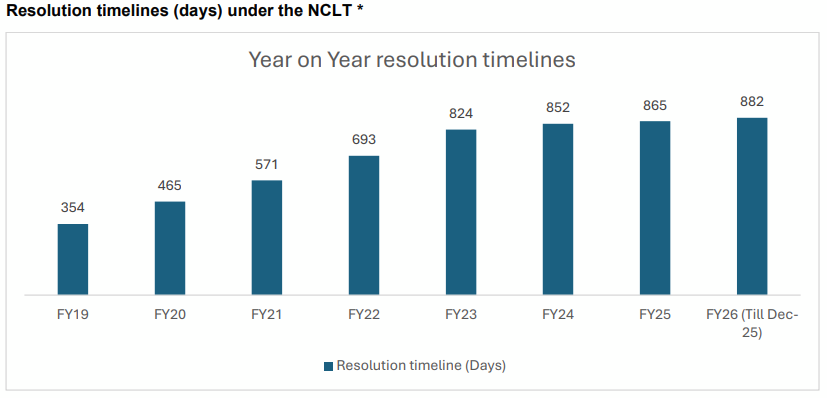
*Timelines above indicate the average resolution time taken from NCLT admission for cases resolved in that particular year. It excludes time taken for admission of cases to NCLT which stood at an average of ~500 days for fiscal 2025
Other reforms focus on asset value protection, improving transparency and strengthening creditor rights to maximise recovery for stakeholders and enhance efficiency of the overall resolution process.
Says Mohit Makhija, Senior Director, crisil ratings, “Currently, the Insolvency and Bankruptcy Code resolution process takes 3.5-4.0 years on average, inclusive of over a year spent just in admitting the case into the Corporate Insolvency Resolution Process (CIRP). Mandating admission within 14 days for proven default cases can significantly reduce the overall resolution timeline by 1.0-1.5 years. Additionally, stipulations requiring approval of resolution plans and liquidation orders within 30 days of finalisation will likely shorten post-admission resolution timelines, which swelled to ~900 days, far exceeding the 330-day regulatory target.”
However, with NCLT’s heavy backlog of ~7000 cases pending admission, introduction of CIIRP will bring a much needed relief by allowing out-of-court settlements. This framework allows borrowers to retain management control minimizing operational disruption – a provision similar to RBI’s June 2019 framework. Moreover, even for out of court settlements under CIIRP, a resolution professional would be appointed for all operational and strategic decision making while having also veto rights over specific resolutions.
Says Shounak Chakravarty, Director, crisil ratings, “CIIRP could prove to be a more streamlined and less adversarial resolution process for both lenders and borrowers while being legally binding. Retaining existing management would minimise the possibility of friction or delaying tactics between parties, and granting resolution professionals veto power over resolutions passed in Board meetings would safeguard creditors’ rights. However, adherence to a 195-day resolution timeline remains to be seen. Even, RBI’s prudential framework which allowed out-of-court resolutions, witnessed sizeable delays.”
What is noteworthy is that to avoid value erosion, the resolution approval process has been split into two stages. One, approving asset transfer to a successful resolution applicant and two, determining the distribution pattern of resolution proceeds. This two-stage process ensures that disagreements among creditors over distribution do not delay implementation of the resolution plan which can in turn diminish the economic value of assets.
Also, to address concerns over inordinate delays in decision making by Committee of Creditors (CoC) and improve its accountability, the amendment has empowered the Insolvency and Bankruptcy Board of India to prescribe standards of conduct for CoC. This move is expected to improve the overall transparency of the process.
Further, to strengthen creditor rights, the amendment has mandated creditors’ supervision on liquidation process as opposed to just consultative role earlier while also clearly establishing their priority over statutory dues in liquidation waterfall.
Also, to prevent loss of value from premature liquidation of viable businesses, the amendment allows for restoration of the resolution process even after failure of initial resolution process provided liquidation order has not been passed.
While the prescribed amendments are expected to enhance the effectiveness of the IBC process and maximize asset value, their actual implementation on the ground warrants careful observation.





1 thought on “India tightens insolvency framework with IBC 2026 reforms”