
India’s realty sector shifts to sustainable growth mode: Ind-Ra
Real estate growth moderates after a strong upcycle, but structural demand and disciplined execution continue to support sector stability.
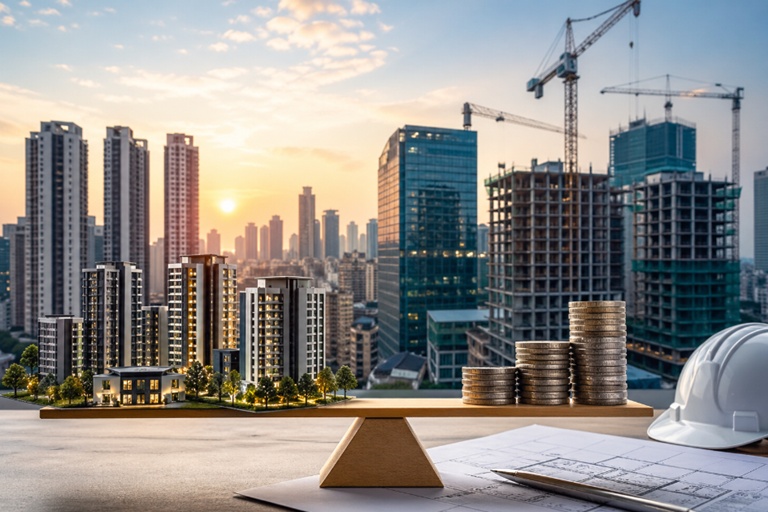
Ind-Ra expects booking growth to moderate in FY27 from elevated levels, after a robust five-year upcycle. (AI Image)
India Ratings and Research (Ind‑Ra) opines that the Indian real estate sector is transitioning from a sharp upcycle to a more normalised growth phase, yet the sector outlook remains structurally neutral. Sustaining balance‑sheet strength in this phase will hinge on prudent liquidity management, disciplined execution, and the ability to maintain sales velocity amid a moderating demand and rising cost pressures, even as select residential segments and commercial asset classes continue to demonstrate resilience.
“The real estate sector is experiencing demand consolidation, with growth rates likely to moderate to less than 10% to 12% from the past five years’ over 30% compounded annual growth in value terms for tier-1 players. The ongoing Middle East conflict could exacerbate operating margins and elongate executional challenges, which has been a pain point over the past two years. A key silver lining remains the resilience of mass market segment (INR10 million to INR30 million ticket) and limited unsold branded inventory. Maintaining sales velocity and ramping-up execution will be critical to ensuing liquid and balance sheet strength”, says Mahaveer Shankarlal, Director, Corporate Ratings, Ind-Ra.
These were the conclusions of an in‑person bankers’ meet hosted by Ind‑Ra across its offices, under the theme “Sector Outlook and Rating Drivers for Corporates in real estate.” The session, which brought together investors to assess the evolving residential and commercial real estate landscape, was followed by an industry perspective from Prashant Choubey, CFO, Sunteck Realty Ltd.
Residential Markets to Move from Upcycle to Consolidation: Ind-Ra expects booking growth to moderate in FY27 from elevated levels, after a robust five-year upcycle. The sector is entering a phase of demand consolidation, with growth for Tier-1 developers likely to normalise to low double-digit levels, reflecting both a higher base and more measured buyer decision-making. However, the sector’s structural relevance remains intact, supported by urbanisation, infrastructure development, rising household incomes, and favourable demographic dynamics. Limited unsold branded inventory—particularly ready stock accounting for below 5%–10% across the top eight cities—continues to balance the market.
Emphasis on Price-Net Margins, Discipline over Speed: Ind-Ra expects price acceleration to normalise to a calibrated 3%–4% level in FY27 with steady new launches cushioning the impact of softening demand. Developers will continue to experience margin pressures from higher input costs, execution hurdles and regulatory uncertainties and delays. Operating discipline will, therefore, be key going forward. Developers will have to balance sales traction, speed of execution and strict cash management to ensure balance-sheet strength during this period of adjustment.
Relative outperformance from Mass and Upper-Mid Segments: Although housing demand is expected to soften, we believe that the lower and upper-mid segments will witness relatively stable demand. Aspirational buyers are likely to gravitate towards bigger units from trusted developers thereby cushioning weakness in overall demand.
Commercial real estate to be Supported by Structural Demand Engines: IT demand growth will continue to be an area of concern for the commercial real estate sector. Nevertheless, commercial real estate growth is expected to remain healthy supported by robust net leasing across BFSI, manufacturing, global capability centres (GCCs) and the buoyant flexible workspace segment. Additions to supply have largely tracked demand levels, keeping pressures from excess supply in check. Vacancy rates are also expected to hover around 12%–18% range keeping rental growth rates firm at 4–6% yoy growth in FY27 for compliant and certified Grade-A assets specifically, where we are already starting to see signs of rental outperformance.
Geopolitical risk may weigh on activities in the near-term: Ind-Ra believes that increased geopolitical risk could impact construction costs and stretch project execution timelines in the near-term. Project launches could see some deferments and some residential buyers could adopt a wait-and-watch attitude leading to softer sales. Large commercial leases could also be spaced out over a longer period of time. However, these factors are more likely to delay demand rather than create structural headwinds to demand. Demand from Tier-1 cities, branded developers, nearing completion projects and office demand from GCCs will continue to support commercial real estate in the medium-term.





3 thoughts on “India’s realty sector shifts to sustainable growth mode: Ind-Ra”