

FY26 Market Wrap: Sensex falls 7.1% amid FPI exodus, metals shine bright
The Sensex declined by around 7%, led largely by decline in real estate, IT and FMCG stocks. However, this trend can reverse soon as on a fundamental level, these sectors remain robust.
On the positive side, sectors such as auto and metal have performed better despite severe headwinds, which attests to their inherent strength. (AI Image)
In the Financial Year 2026 (FY26), the Sensex exhibited renewed volatility due to several factors, including trade-related disruptions, concerns surrounding stretched valuations, muted profit growth, and geo-political tensions. This contributed to significant outflows from the domestic markets, ultimately leading to a 7.1% decline in the benchmark equity index. Equity outflows of around US$ 20 billion in FY26 are the highest ever on record. Previously in FY22, FPIs had withdrawn US$18.5bn from domestic equities. Across sub-indices, losses were concentrated in the FMCG, IT and real estate stocks. On the other hand, auto and metal index outperformed. In terms of movement in global prices of metals, a clear uptrend was visible. Precious metals were the clear winner. Other metals such as aluminum, copper and zinc too saw significant increases, according to a Bank of Baroda report.
Movement in domestic equity market
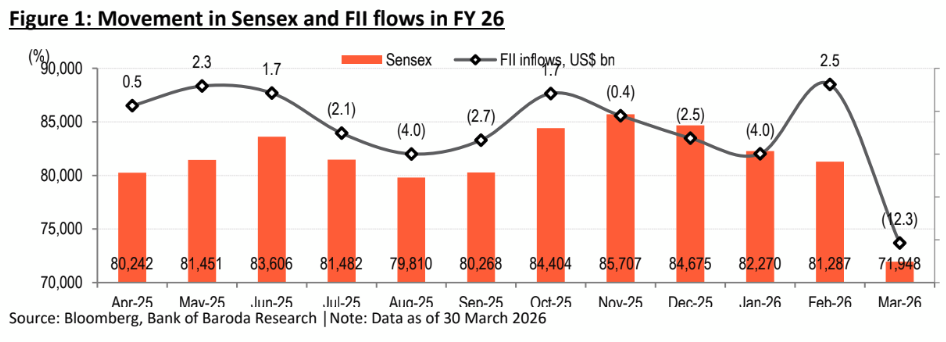
India’s stocks performance in 2026 has shown significant volatility. As seen in Figure 1, movement in FII flows largely impacted how the Sensex behaved for the better part of the year. In Q1 FY26, equity markets saw steady inflows of US$ 7.8bn, and as a result, Sensex rose by around 4.5%. However, in Q2 FY26, the domestic markets were impacted adversely due to uncertainty over US trade deal, which also resulted in outflows of US$ 8.7bn. In the period, the Sensex declined by ~4% on a point-to-point basis. In Oct-Nov’25, while FPI inflows remained weak at US$ 1.2bn, the Sensex rose by over 6%. Thereafter, there has been a steady decline in the Sensex with Mar’26, marking the worst monthly decline of over 12.3%. Incidentally, FIIs have withdrawn close to US$ 12bn from the domestic equity market in Mar’26. In FY26, the Sensex has declined by 7.1%. In the same period, FII outflows have totalled US$ 19.3bn (up to 27 Mar 2026).
Sector wise performance
In terms of sub-indices, the performance is varied. However, the trend broadly indicates the trend in profitability of these sectors in FY26. Notably, the decline in 4 sectors, namely, real estate, IT, TECK and FMCG has been higher compared with the decline in the benchmark index. IT and the associated TECK sector have been impacted due to concerns over AI and possible layoffs. This in turn has led to expectations of lower demand for real estate which has been reflected in the decline in the performance of these indices.
Apart from this, increased cost of cement and other construction materials, due to geo-political tensions can also explain investors’ aversion to real estate stocks. Separately, FMCG sector has continued to see muted growth, which has largely contributed to the decline in the value of FMCG stocks. Banking stocks have also declined by around 5% due to challenged in deposit mobilisation and its likely impact on banks’ performance. Consumer durables stocks have declined as a depreciating currency makes imports expensive for both finished goods as well as intermediate inputs.
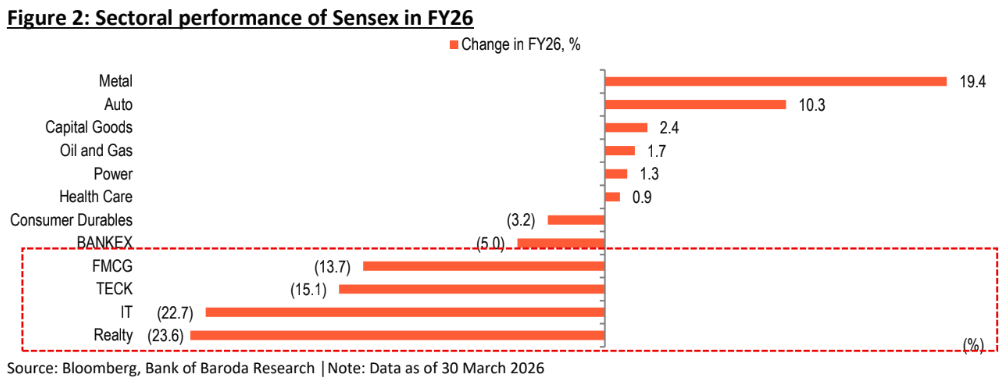
On the other hand, several sectors have shown a remarkable stock performance. Most notably, metal stocks have increased by 19.4% on a YoY basis. This has been attributed to an increase in global prices of metals. Auto stocks too have done reasonably well and risen by 10.3% in FY26, as the sector continues to gain from strong demand and robust profitability. Stocks of capital goods have given an annual return of 2.4% to investors, led by capex push of the government as well as private sector. Oil and gas sector stocks too have provided positive returns to the investors, even as the performance in Mar’26 did erode a large part of the gains.
Movement in global metal prices
Global metal prices have ended FY 26 with significant gains. In particular, prices of precious metals such as gold and silver witnessed the maximum gains. In fact, gold prices rallied by close to 50% in FY26. This can be attributed to a number of factors such as low global interest rates, increased policy uncertainty as well as gold buying by global central banks. Apart from this, an increase in investment activity also pushed prices higher as there was a steady increase in demand for gold backed ETFs and gold bar and coins.
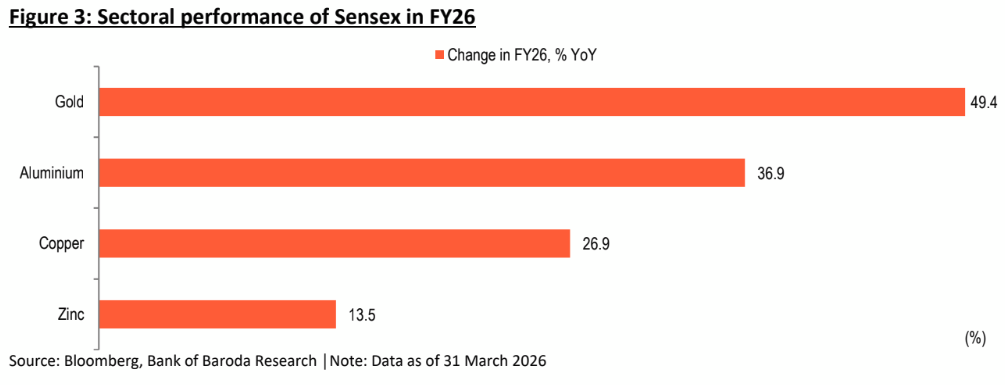
Amongst other metals, prices of aluminium also increased significantly to 36.9%, while prices of copper also increased by a sharp 26.9%. Incidentally, the US President has imposed sweeping tariffs on these products which has contributed significantly to the increase in prices. More recently, the West Asia war has further fuelled a rally in prices, particularly for aluminium products as aluminium plants across Gulf nations were hit during the conflict.
Concluding remarks
The last fiscal year was a tumultuous year for markets. US tariff policies, Fed rate outlook and geo-political tensions played a significant role in the movement in both the global as well as domestic markets. The Sensex declined by around 7%, led largely by decline in real estate, IT and FMCG stocks. However, this trend can reverse soon as on a fundamental level, these sectors remain robust. The real estate sector is likely to benefit from continued demand of premium housing. FMCG volumes are also expected to improve, which will also reflect in the performance of stocks. The IT sector could face possible headwinds due to impact of AI and a slowdown in hiring.
On the positive side, sectors such as auto and metal have performed better despite severe headwinds, which attests to their inherent strength. Global metal prices were mostly higher, driven by higher tariffs and supply disruptions pushed prices of metals higher. Even after the war related uncertainty eases, prices for these metals are likely to stay elevated as supply chain disruptions can take some time to normalise.