
Mumbai’s redevelopment boom drives rental demand, pushes up property yields: Kotak
As ageing buildings make way for new homes, displaced residents are fuelling rental demand in established neighbourhoods, pushing up rents and improving returns for property owners.
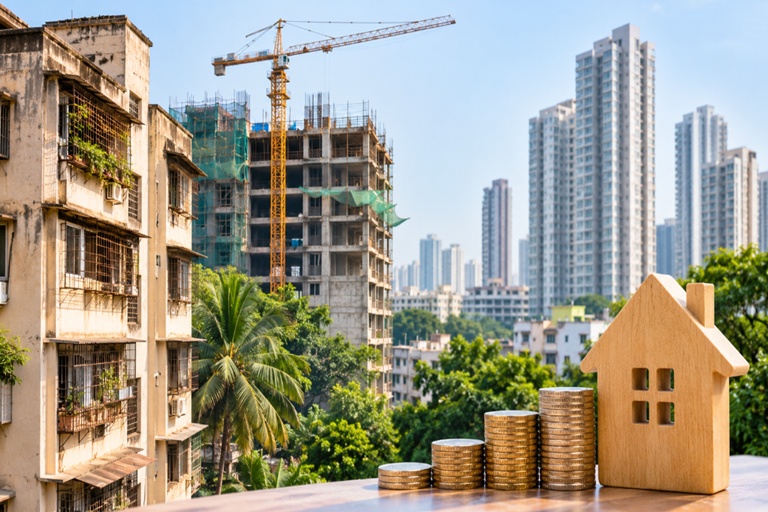
Mumbai's rental market has traditionally been driven by migration and employment growth. Redevelopment is now emerging as another meaningful driver. (AI Image)
Mumbai’s redevelopment wave is doing more than replacing ageing buildings with new towers. It is also creating a steady stream of rental demand across the city, helping push up rents and improve rental yields for homeowners and investors.
Redevelopment activity has accelerated sharply in recent years. Project count has grown at an estimated CAGR of nearly 66% over the past five years, reflecting the scale at which older buildings are being redeveloped across Mumbai. As more societies move into redevelopment, residents are increasingly looking for rental homes close to their existing neighbourhoods, schools, workplaces and social circles. This is adding pressure to local rental markets, particularly in established residential locations where available inventory is limited.
What makes Mumbai’s redevelopment story unique is that much of this rental demand is supported by developers themselves. In many projects, builders provide transit rent to displaced residents until redevelopment is completed. This ensures that families remain active participants in the rental market for extended periods, often for several years.
The trend gained further momentum after the pandemic, when housing preferences changed significantly. Larger homes, better construction quality, improved amenities and overall better living experience became more important for many families. Residents living in older buildings increasingly became willing to opt for redevelopment if it meant moving into a newer and better home in the same neighbourhood. During the transition period, many preferred renting relatively newer homes which are typically expensive relative to older construction.
“As Mumbai replaces ageing buildings with newer ones, redevelopment is influencing both rental and ownership markets,” said Nakul Saxena, Head – Home Loans, Kotak Mahindra Bank. “Beyond improving housing quality, it is also improving the economics of residential real estate. Rising rents and better rental yields are making housing attractive not only for end-users but also for investors looking at stable, long-term returns.”
Mumbai’s rental market has traditionally been driven by migration and employment growth. Redevelopment is now emerging as another meaningful driver. Unlike many migrant tenants who may move frequently, redevelopment-affected families often rent for several years until their new homes are ready. This creates sustained demand and reduces available rental inventory in some pockets.
Mumbai’s rental market is seeing a sharp uptick in several locations. With many old buildings undergoing redevelopment and fewer homes available for rent, tenants are having to pay more to find accommodation. In some neighbourhoods, rents have gone up much faster than inflation.
This has been good news for landlords and property investors. Higher rents mean better returns from their properties, with rental income now adding more to overall gains than it did a few years ago. For many homeowners, rent is no longer just an additional benefit; it is becoming an important part of the returns from owning a property.