
Budget 2026 Incentives to Accelerate Municipal Bond Issuances: Ind‑Ra
Ind-Ra believes larger size single bond issuances would materialise gradually; however, the medium-term outlook for municipal bond activity remains strong.
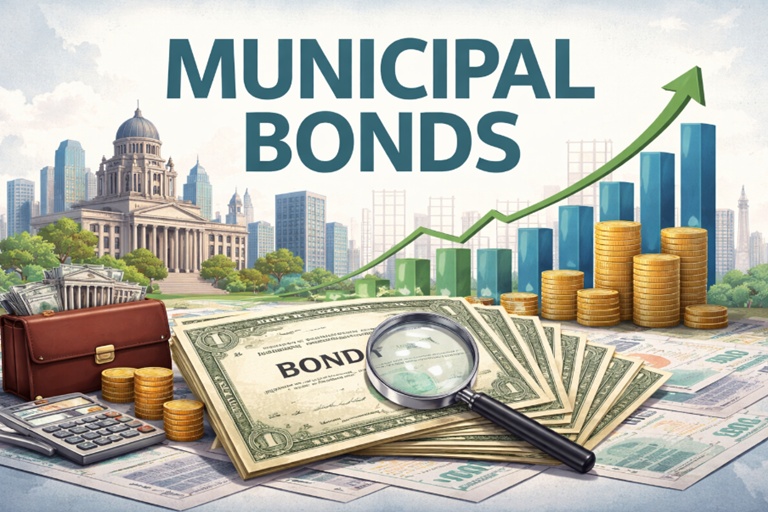
The budget introduces a new incentive of INR1,000 million for every single municipal bond issuance exceeding INR10,000 million. (Image: AI Generated)
Budget incentives and new structures
\n
Ind‑Ra highlights a fresh incentive of INR1,000 million for any single municipal bond issuance that exceeds INR10,000 million. The analyst expects this will push large ULBs to tap debt capital markets for major urban infrastructure projects while tightening their financial governance. Existing AMRUT‑based incentives remain unchanged, supporting smaller and mid‑size ULBs.
\n
First‑time bond issues receive an incentive equal to 13 % of the amount raised, capped at INR260 million. Subsequent issues must be green bonds covering water, sanitation, renewable energy or urban resilience. Those green issues earn INR100 million per INR1,000 million raised, with a ceiling of INR200 million.
\n
Only a handful of green issuances have appeared. They include Ghaziabad Nagar Nigam, Indore Municipal Corporation, Ahmedabad Municipal Corporation, Vadodara Municipal Corporation, Surat Municipal Corporation and Pimpri Chinchwad Municipal Corporation.
\n\n
Market activity and outlook
\n
As of 2 February 2026, 28 municipal bond issuances by 21 ULBs have raised INR40,347.50 million since FY18, with an outstanding balance of INR35,847.35 million. The biggest single issuance, INR2,440 million, was completed by the Indore Municipal Corporation in FY23. Issuance volume remained steady during 10MFY26, reaching INR12,508.50 million, surpassing the previous annual high of INR9,899 million recorded in FY19.
\n
Ind‑Ra expects further issuances in the near term. The Nashik Municipal Corporation is actively preparing a green bond, reflecting growing interest among larger ULBs.
\n\n
Finance Commission grants and infrastructure focus
\n
The 16th Finance Commission has recommended basic grants of INR2.32 trillion for ULBs and performance‑linked grants of INR290.16 billion for FY27‑FY31. A special infrastructure component of INR561 billion is earmarked for select cities with populations between 1 million and 4 million. The funding will follow a 60:40 ratio, with the Union government providing 60 % and the state government plus the concerned ULB contributing the remaining 40 %.
\n
These grants, combined with the incentive framework, create a favorable environment for financially strong ULBs to fund capital expenditure through a mix of own resources, grants and market borrowing.
\n\n
Pricing dynamics and market factors
\n
Coupon rates for municipal bonds issued between FY18 and 10MFY26 ranged from 7.15 % to 10.23 %. The average spread over the 10‑year Government of India yield was 142 basis points during the same period. Bond pricing continues to be shaped by prevailing interest rates, tenure, credit rating, inflation expectations and liquidity conditions.
\n\n
Strategic considerations for ULBs
\n
ULBs are still testing the waters, with most issuances limited to INR2,000 million. Large ULBs that have historically relied on bank loans are now more inclined to use bond issuances to take advantage of the enhanced incentive framework. Successful bond programmes require viable projects, proper approvals and sustainable funding structures, according to Ind‑Ra.
\n\n
Broader context
\n
The push for municipal bond financing aligns with the wider financing gap highlighted in India’s cities need $2.4 trillion by 2050, but municipal finances lag far behind: FICCI‑EY. Infrastructure demand, as noted in Infrastructure, affordability drive homebuyer demand beyond big metros: Magicbricks PropIndex, further underscores the need for diversified funding sources. Alternative financing avenues such as REITs and InvITs are also gaining traction, as discussed in India’s REIT, InvIT market poised to double AUM to Rs 20 trillion by 2030: Avendus Report. Meanwhile, the current bond market outlook, reflected in Global bond yields turn sticky amid inflation fears, India’s 10Y seen near 7%, influences pricing and investor sentiment.







1 thought on “Budget 2026 Incentives to Accelerate Municipal Bond Issuances: Ind‑Ra”